Introduction
Understanding cervical dilatation and effacement is an important part of obstetric and maternity care education. Nursing and medical students need to understand how the cervix changes during labour and how these changes are assessed. A cervical dilatation/effacement model provides a practical way for students to visualize and practise these concepts in a controlled educational environment.
What Is a Cervical Dilatation/Effacement Model?
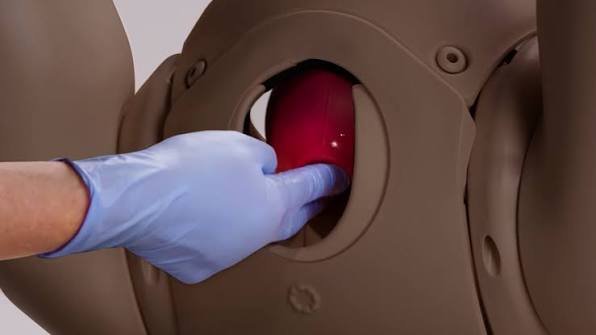
A cervical dilatation/effacement model is a simulation tool designed to demonstrate different stages of cervical changes during labour. Instead of relying only on illustrations or theoretical explanations, students can use a physical model to better understand how cervical dilatation and effacement progress.
These models can be particularly useful in nursing schools, medical education programs, midwifery courses, and clinical simulation laboratories.
Understanding Cervical Dilatation and Effacement
During labour, the cervix undergoes important changes as the body prepares for childbirth. Dilatation refers to the opening of the cervix, while effacement describes the thinning and shortening of the cervix.
Students need to understand that these processes occur progressively and are important components of labour assessment. A simulation model can help make these concepts more tangible and easier to understand.
How the Model Supports Student Learning
A cervical dilatation/effacement model can complement lectures, textbooks, diagrams, and instructor demonstrations. It allows learners to connect theoretical knowledge with physical representations of anatomical changes.
Key learning benefits include:
1. Visual understanding:
Students can observe different stages of cervical change rather than relying exclusively on written descriptions.
2. Hands-on practice:
Physical models allow learners to develop familiarity with assessment concepts in a controlled environment.
3. Improved retention:
Interactive learning can help students remember anatomical and clinical concepts more effectively.
4. Instructor demonstration:
Educators can use the model to explain changes during different stages of labour.
5. Repeatable training:
Students can revisit the same concepts multiple times as they develop their understanding.
Supporting Clinical Skills Training
Simulation models are particularly valuable when teaching subjects that involve assessment and clinical decision-making. Educators can incorporate cervical dilatation and effacement models into structured skills-lab activities.
Training sessions can focus on:
1. Identifying different stages:
Students can learn to distinguish between varying degrees of cervical dilatation and effacement.
2. Assessment practice:
Instructors can explain how these findings are considered during labour assessment.
3. Clinical communication:
Students can practise communicating assessment findings clearly and professionally.
4. Scenario-based learning:
Models can be incorporated into simulated labour and delivery scenarios.
5. Knowledge assessment:
Educators can use models to evaluate whether students understand the progression of cervical changes.
Benefits for Nursing and Midwifery Programs
A cervical dilatation/effacement model can support standardized education across multiple student groups. Every learner can be introduced to the same physical representation, helping instructors maintain consistency during demonstrations and assessments.
The model can also make lessons more engaging by encouraging students to participate rather than simply observe a presentation. Repeated practice can help learners become more familiar with obstetric terminology and assessment concepts.
Conclusion
A cervical dilatation/effacement model is a useful educational resource for teaching important concepts in maternity and obstetric care. By providing a hands-on representation of cervical changes during labour, the model can help nursing, medical, and midwifery students develop a clearer understanding of anatomy, assessment, and labour progression. Combined with qualified instruction and broader clinical education, simulation can help prepare students for supervised patient care.
